What Is an Afruimwagen?
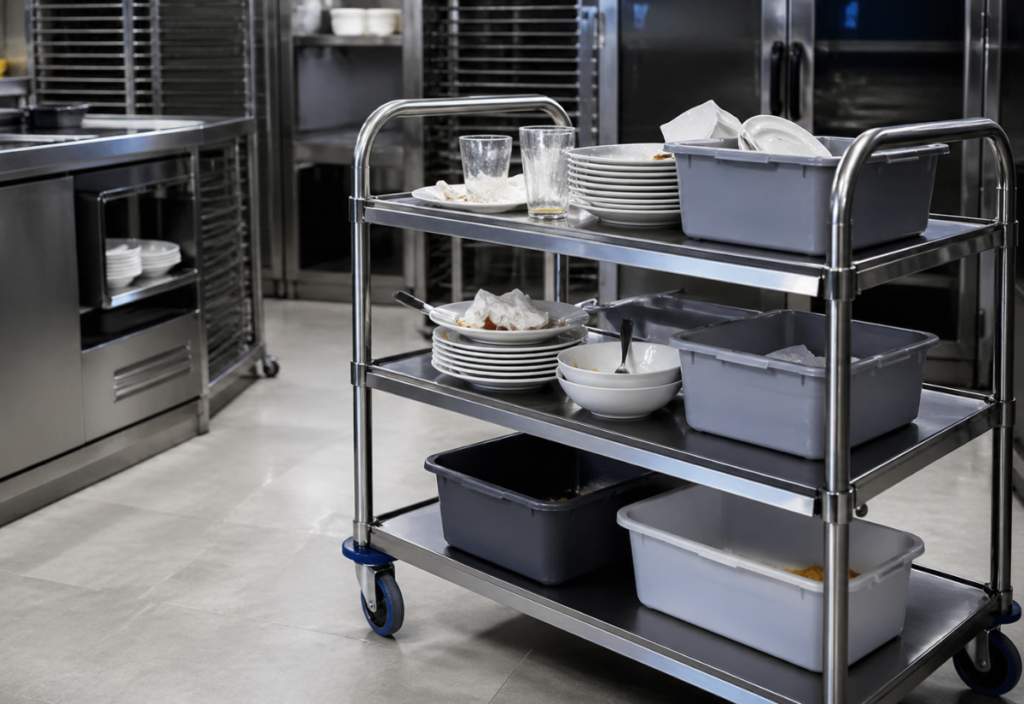
An afruimwagen is a wheeled clearing trolley designed to move dirty dishes, glasses, cutlery, and waste from tables to the wash-up area quickly and cleanly. In English, it is often called a clearing trolley, bus cart, or dish trolley.
These trolleys come with swivel wheels, multiple shelves or bins, and bumper edges to protect walls and furniture. They are a standard piece of equipment in professional kitchens, restaurants, hotels, canteens, and care facilities.
The key thing to understand from the start: an afruimwagen is only for dirty items. It should never be used for serving clean food or clean dishes. That distinction matters a great deal for food hygiene.
Why Afruimwagens Are Essential in Hospitality
Every busy restaurant or hotel knows the pressure of turning tables fast and keeping the dining room clean. A good clearing trolley solves several problems at once.
Saves time and reduces walking
Without a trolley, staff walk back and forth between tables and the kitchen dozens of times per shift. With an afruimwagen, one trip clears an entire section. That means faster table turnovers and more guests served per hour.
Reduces physical strain on staff
Carrying heavy stacks of plates is one of the leading causes of back and shoulder injuries in hospitality. A well-built clearing trolley takes the weight off staff and makes the job physically safer and less tiring over a long shift.
Keeps the kitchen organized
One of the biggest problems in a busy kitchen is chaos at the dishwashing station — plates, glasses, and food waste all mixed together. An afruimwagen lets staff pre-sort items before they even arrive in the kitchen, which speeds up washing and reduces breakages.
Improves the guest experience
When tables are cleared quickly and smoothly, the dining room looks professional and well-run. Guests notice the difference between a restaurant where staff are rushing with arms full of plates and one where clearing is calm and efficient.
The Different Types of Afruimwagens
Not all clearing trolleys are the same. The right type depends on the size of your operation and what you need the trolley to do.
Standard shelf trolley
This is the most common type. It has two or three flat open shelves where dishes, glasses, and cutlery are stacked. It is simple, durable, and works well in most restaurants and cafés. The lightweight design makes it easy to push through tight spaces.
Trolley with sorting bins
Instead of flat shelves, this model uses removable plastic bins to separate plates, glasses, cutlery, and food waste. Staff sort items at the table, and the bins slide straight into the dishwashing area. This model is ideal for high-volume operations where speed and sorting both matter.
Tray trolley (dienbladenwagen)
A tray trolley is designed to hold used dining trays upright in individual slots. These are widely used in self-service canteens, hospital dining rooms, and hotel breakfast areas where guests clear their own trays. The same trolley can also be used in reverse to deliver loaded breakfast trays.
Trolley with waste container
This model includes a built-in waste bin alongside the shelf space for dishes. Food scraps go straight into the bin at the table, which keeps the shelves cleaner and reduces mess at the dishwashing station.
Glass trolley
Specially designed for fragile glassware, this type has padded compartments or glass racks that hold each glass securely during transport. It is essential in bars, banqueting operations, and anywhere large numbers of glasses need to be moved safely.
Heavy-duty catering trolley
Built for outdoor events, large banquets, and catering operations, these trolleys have reinforced frames, higher weight capacity, and often foldable or stackable designs for easy storage in vans or storage rooms.
Stainless Steel or Plastic: Which Material Is Best?
The two main materials for afruimwagens are stainless steel (RVS) and plastic (polypropylene). Each has clear advantages depending on your situation.
Stainless steel (RVS)
Stainless steel is the professional standard in commercial kitchens and restaurants. It is strong, long-lasting, resistant to rust and corrosion, and easy to clean thoroughly. It handles heavy daily use without bending or cracking. It also meets the strictest hygiene standards because it does not absorb bacteria or odors.
The main downside is weight. A stainless steel afruimwagen is heavier than a plastic one, which can matter in small operations where one staff member handles everything alone.
Plastic (polypropylene)
Plastic trolleys are lighter, easier to push, and less expensive. They resist moisture and cleaning chemicals well and are perfectly adequate for lighter use in canteens, smaller cafés, or care homes. The trade-off is that they are less robust and may not last as long under heavy daily loads.
| Feature | Stainless Steel | Plastic |
| Durability | Excellent | Good |
| Weight | Heavier | Light |
| Hygiene rating | Excellent | Good |
| Ease of cleaning | Very easy | Easy |
| Lifespan | Very long | Long |
| Price | Higher | Lower |
| Best for | Restaurants, hotels, heavy use | Canteens, care homes, lighter use |
The bottom line: If your operation is busy and the trolley will be used multiple times every day, invest in stainless steel. If the use is lighter or budget is tight, plastic is a solid choice.
Hygiene and HACCP Rules
Food safety legislation in most countries requires hospitality businesses to follow HACCP principles — a system that identifies and controls food safety risks. Afruimwagens play a direct role in this.
The most important rule: never mix clean and dirty
A clearing trolley used for dirty dishes must never be used to transport clean plates, food, or beverages. Once a trolley has carried dirty items, it is contaminated. Using it for clean products risks cross-contamination, which is both a food safety hazard and a breach of HACCP rules.
This means you need separate trolleys for:
- Serving clean food and drinks
- Clearing dirty dishes and waste
Daily cleaning is non-negotiable
Every afruimwagen must be cleaned thoroughly after each service. Use approved cleaning and sanitizing products. Pay special attention to wheel brackets, shelf edges, and bin holders where food residue can collect.
Choose trolleys that are easy to clean
Look for models with smooth surfaces, rounded edges, and no hidden crevices. Sharp edges and tight corners are both a hygiene risk and a safety hazard for staff. A good afruimwagen should be designed so that nothing is hard to reach with a cloth or brush.
Where Are Afruimwagens Used?
Clearing trolleys are used far more widely than most people realize. They are not just for restaurants.
Restaurants and cafés
The most obvious application. Afruimwagens allow front-of-house staff to clear and reset tables quickly during busy service, which directly increases revenue by shortening the time between seatings.
Hotels
Hotels use clearing trolleys in restaurants, breakfast rooms, banqueting halls, and on room service floors. A large hotel may have dozens of trolleys spread across different departments.
Business and school canteens
In self-service environments, tray trolleys are placed in the dining area so that diners can return their own trays. Staff then wheel the full trolley to the dishwashing area without any additional carrying.
Hospitals and care homes
Healthcare facilities use afruimwagens for food trolley rounds, collecting used meal trays from wards and returning clean ones. The hygiene requirements here are just as strict as in the hospitality sector.
Catering and events
At weddings, conferences, and outdoor events, heavy-duty clearing trolleys make it possible to clear large numbers of tables efficiently at the end of service. They also double as transport for clean equipment during setup.
Bakeries and food production
Some trolley formats — particularly rack trolleys — are used in bakeries and food production settings to transport trays and products between preparation and storage or delivery areas.
What to Look for When Buying an Afruimwagen
Buying the wrong afruimwagen wastes money and creates problems. Here is a straightforward checklist to guide your decision.
Know your space
Measure the narrowest doorway or corridor your trolley will need to pass through. Most standard afruimwagens are around 50 to 60 cm wide. If your restaurant has tight spaces between tables, a compact model is essential.
Estimate the load
Think about how many tables you need to clear per trip and how heavy the load typically is. A trolley rated for 50 kg is enough for a small café. A large hotel restaurant may need a model rated for 100 kg or more.
Check the wheels
Wheel quality makes a huge difference in daily use. Look for sealed ball-bearing swivel wheels that roll quietly and smoothly on any floor surface. A braking function on at least two wheels is important for stability during loading and unloading.
Consider the shelf layout
Decide whether flat open shelves or sorting bins suit your workflow better. Open shelves are more flexible. Bins are better for sorting and for busy kitchens where pre-sorting saves time.
Look at the finish
Every edge and corner should be smooth and rounded. There should be no sharp welds, exposed bolt heads, or gaps where food waste can collect. A good finish means safer use for staff and easier cleaning.
Think about long-term cost
A cheaper trolley that breaks within a year costs more in the long run than a quality stainless steel model from a reputable brand. Well-known brands in this category include Bartscher, Combisteel, Diamond, Saro, and Vogue. Their products are built for professional daily use and come with reliable after-sales support.
Cleaning and Maintenance
A well-maintained afruimwagen lasts many years. Follow these steps to keep yours in good condition.
After every service:
- Rinse the trolley with warm water to remove all food residue
- Clean all surfaces with an approved kitchen sanitizer
- Dry with a clean cloth or allow to air dry in a ventilated area
Weekly:
- Remove and clean all bins, inserts, or shelves individually
- Inspect the wheel brackets for trapped food debris
- Check that all welds and frame joints are intact
Monthly:
- Inspect wheel bearings and replace any that are stiff or noisy
- Check the brakes on each locking wheel
- Look for rust spots, dents, or cracks, especially on stainless steel models
Storage:
- Store afruimwagens in a dry area when not in use
- Do not stack heavy items on top of trolleys during storage
- Keep clean and dirty trolleys in clearly separate storage areas
Conclusion
An afruimwagen is one of the most practical investments a hospitality business can make. It saves time, reduces physical strain on staff, improves kitchen organization, and helps your operation meet food hygiene standards every day.
The right model depends on your space, your service volume, and your hygiene requirements. For most professional restaurants and hotels, a stainless steel afruimwagen from a reputable brand is the smartest long-term choice. For lighter operations, a good-quality plastic model does the job well at a lower cost.
Whatever you choose, remember the golden rule: keep your clearing trolley for dirty items only, clean it thoroughly after every service, and never mix it up with your serving equipment. Those simple habits keep your operation hygienic, efficient, and compliant.
FAQ
1. What does afruimwagen mean in English?
Afruimwagen translates from Dutch to English as clearing trolley, dish trolley, or bus cart. It refers to a wheeled trolley used in restaurants and hospitality businesses to collect and transport dirty dishes, glasses, and cutlery from tables to the kitchen.
2. What is the difference between an afruimwagen and a serveerwagen?
A serveerwagen (serving trolley) is used to deliver clean food and drinks to guests. An afruimwagen is used to collect dirty dishes and waste from tables. The two must never be used interchangeably, as this creates a food hygiene and HACCP compliance risk.
3. How much does a professional afruimwagen cost?
Prices range from around €80 to €90 for a basic plastic model to over €400 for a high-capacity stainless steel trolley with premium wheels and multiple sorting bins. For daily professional use, mid-range to high-end models offer the best long-term value.
4. Can I use one afruimwagen for both clearing tables and serving food?
No. HACCP food safety rules require strict separation between dirty and clean transport. Once a trolley has been used for dirty dishes, it must be thoroughly cleaned and sanitized before any contact with clean food or tableware. In practice, separate dedicated trolleys are strongly recommended.
5. Which brands make the best afruimwagens?
Well-regarded brands include Bartscher, Combisteel, Diamond, Saro, Vogue, and Maxima. These brands specialize in professional hospitality equipment and produce models built for heavy daily use with good hygiene compliance and long lifespans.