What Is Anticimex 3D Sanidad Ambiental?
Anticimex is a pest control and environmental services company that started in Sweden in the 1930s and has since grown across Europe, the Americas, and Asia. In Spain, one of its main operating arms is Anticimex 3D Sanidad Ambiental SA — a company dedicated to protecting buildings, industries, and public spaces from pests and hygiene risks.
The “3D” in the name refers to three core pillars: disinfection, disinsection (insect control), and deratization (rodent control) — integrated into a unified environmental health strategy. This isn’t three separate services bolted together. It’s a deliberately coordinated system where each dimension reinforces the others.
Beyond pest contracts, Anticimex 3D Sanidad Ambiental provides environmental hygiene, water treatment, and indoor air-quality services for public bodies and private companies across Spain. It operates in sectors where hygiene standards aren’t optional — food manufacturing, healthcare, hospitality, and public procurement.
What sets this operation apart from a conventional pest control company is the digital infrastructure behind it. And that’s where WiseCon enters the picture.
Who Is WiseCon and Why Does the Partnership Matter?
WiseCon is a Danish company that specializes in intelligent pest control hardware — traps, sensors, and communication modules designed to work within connected digital ecosystems. Their tools don’t just catch pests; they generate continuous data streams that reveal where pressure is building, which zones are clear, and what environmental conditions are changing.
The relationship between Anticimex and WiseCon grew from a simple technology partnership into a broader platform strategy. In 2015, Anticimex acquired an initial minority stake in WiseCon. By 2017, it had purchased the remaining shares and established the Anticimex Innovation Center in Helsinge, Denmark — turning WiseCon into a central hub for developing digital pest-control solutions across the entire group.
This wasn’t a typical acquisition aimed purely at cutting costs or eliminating a competitor. It was a strategic move to own the technological backbone of a new kind of environmental service. Anticimex wasn’t just buying a product line — it was securing the infrastructure for a global digital platform.
The Platform Strategy Explained: From Acquisition to Integration
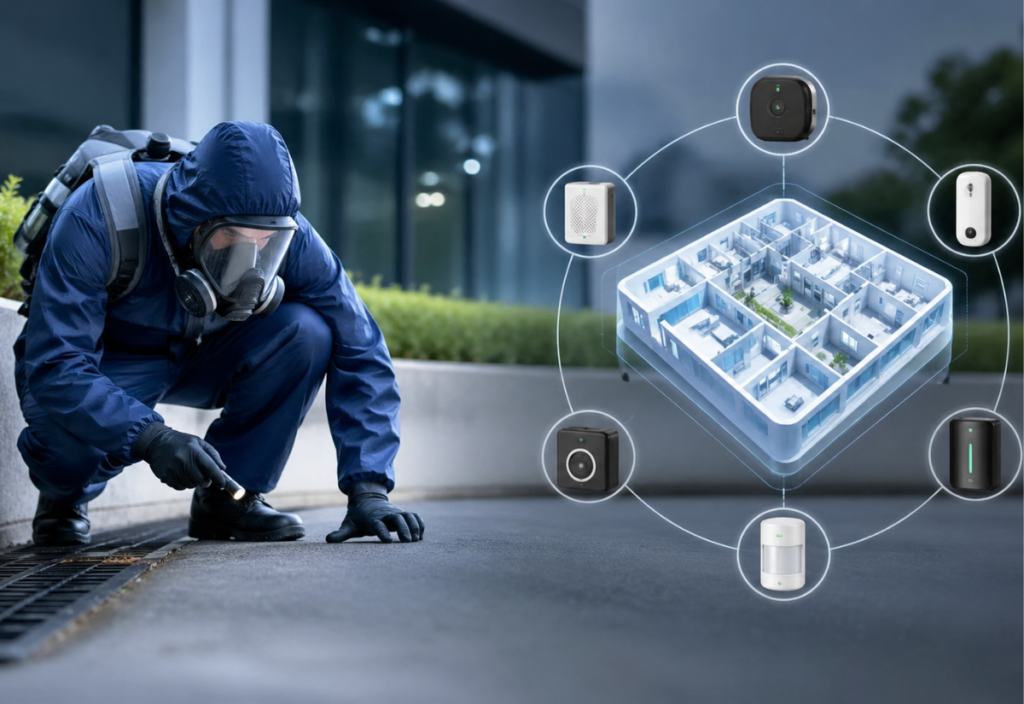
The Wisecon estrategia de plataforma goes beyond buying hardware. It is about integrating WiseCon’s traps, sensors, and communication modules with Anticimex’s global service operations and SMART digital system. Data from thousands of devices flows into shared platforms, where it supports analytics, reporting, and continuous improvement.
For Anticimex 3D Sanidad Ambiental, this means shifting from isolated contracts — treating cockroaches in one restaurant or rodents in a single warehouse — to an integrated service model. Multiple sites can be connected to the same digital ecosystem, monitored from one dashboard, and supported by a mixture of on-site visits and remote supervision.
Think of it as the difference between a collection of local clinics and a networked hospital system. The local expertise remains; the intelligence behind it becomes shared, scalable, and continuously improving.
The consolidation strategy aims to standardize tools, training, and reporting across branches while still keeping local teams close to their customers. That balance — global consistency, local responsiveness — is what makes the platform model genuinely competitive.
How the Technology Works: Sensors, Traps, and Real-Time Data
Understanding the Wisecon platform strategy requires a clear picture of how the hardware and software layer work together.
Smart Traps and Connected Sensors
Electronic traps such as the WiseBox — originally developed by WiseCon — have been deployed in pig and poultry farms to remove rats without poison. These devices use an automatic electrocution mechanism and can be configured for remote follow-up and online access to capture statistics. Similar traps operate in sewers, along perimeter fences, and inside large warehouses where manual inspection would be slow and unreliable.
The Centralized Dashboard
The WiseCon platform consolidates hardware inputs into an intuitive dashboard. Users can view alerts, historical trends, and compliance reports. APIs allow integration with facility management systems, enhancing workflow automation and cross-platform data sharing.
AI-Driven Prediction
The core strength lies in continuous monitoring powered by IoT sensors placed strategically across facilities. These devices collect data 24/7 and feed it into cloud-based platforms for analysis. Artificial intelligence processes this information to identify patterns and predict risks — for example, rising humidity in a storage area might trigger an alert for potential mold, allowing quick adjustments to ventilation.
Automated Notification
Automated notifications reach managers via apps or dashboards, enabling fast responses without waiting for routine inspections. Remote access means overseeing multiple sites from one interface — ideal for chains of hotels, hospitals, or warehouses.
The result is a system where pest management becomes genuinely measurable. Not “we treated the facility last month” — but “here are 47 data points showing zero rodent activity in zone C across the past 90 days.”
Industries That Benefit Most
The Anticimex 3D Sanidad Ambiental / Wisecon platform strategy isn’t a one-size-fits-all product. Its value shifts depending on the operational context, though several industries have emerged as particularly strong use cases.
Food Production and Processing
This is arguably where the stakes are highest. A single contamination event can trigger product recalls, regulatory fines, and lasting reputational damage. In the food industry, sanitary conditions are essential, and the platform enables continuous monitoring of pest activity alongside temperature and humidity data that directly affect product safety.
Healthcare and Hospitals
Hospitals need high standards of environmental health. With Anticimex 3D Sanidad Ambiental, they can monitor pest activity, air quality, and temperature to maintain a sterile environment. The Wisecon platform then analyzes this data to help administrators take action quickly when risks appear — such as increased humidity that might encourage mold growth.
Hospitality
A hotel chain that implemented the 3D Sanidad Ambiental technology reported not only resolved pest problems but also improved guest satisfaction ratings— demonstrating that smart environmental health has a direct line to customer experience.
Urban and Municipal Infrastructure
Cities face unique challenges: sewer networks, public buildings, transit systems, and green spaces all create pest pressure that’s difficult to manage with traditional periodic inspection. Technologies used within this model are not limited to office buildings — traps and sensors can be installed in sewers, along perimeter fences, or inside large warehouses where manual checks would be slow and labor-intensive.
Retail and Commercial Buildings
Retail stores and commercial buildings benefit from real-time environmental tracking. If air quality drops or pest activity spikes, the system notifies managers immediately, allowing action before customer satisfaction is affected.
Sustainability and Reduced Chemical Dependency
Traditional pest control relied heavily on scheduled chemical applications — whether or not conditions actually warranted them. That approach means unnecessary chemical use, environmental exposure, and recurring cost regardless of actual risk levels.
The preventive focus of this model reduces downtime, cuts chemical usage, and supports compliance with health and environmental standards.When sensors and smart traps detect the precise location and intensity of pest pressure, technicians can apply targeted interventions rather than blanket treatments.
The platform tracks energy use, water consumption, waste production, and emissions, providing insights for reducing environmental impact. Organizations can plan long-term sustainability strategies while maintaining efficiency.
For companies under ESG (Environmental, Social, and Governance) reporting requirements, this shift from reactive to proactive environmental management produces something genuinely valuable: verifiable data showing reduced chemical dependency over time.
Digital Reporting and Regulatory Compliance
Compliance has historically been one of the most burdensome aspects of environmental health management — particularly for regulated industries like food production and healthcare. The platform strategy transforms this from a reactive process into a continuous, automated one.
Because the underlying system stores historical data, clients can track trends over weeks and months. This makes it easier to demonstrate compliance during audits, explain investments to senior management, and evaluate whether structural changes — like sealing entry points or redesigning waste areas — have actually reduced pest pressure.
Data is securely stored in cloud systems with encryption protocols to protect sensitive information. Continuous logging ensures audit-ready records, while access controls and role-based permissions maintain operational security.
WiseCon provides transparent, verifiable records of environmental conditions, enabling organizations to demonstrate compliance with legal standards and industry certifications.
In practical terms: when a food safety inspector walks in, the answer to “show me your pest control records” becomes a real-time dashboard rather than a folder of printed service tickets.
Challenges and How the Strategy Addresses Them
No platform strategy is without friction. The Anticimex / WiseCon model faces real operational challenges, and acknowledging them is essential to understanding how the strategy actually works in practice.
Connectivity and Infrastructure
Branches need reliable connectivity, robust data security, and clear processes for handling alerts so that information does not simply accumulate without action. In older facilities or rural locations, network infrastructure may require investment before smart devices can operate effectively.
Scaling Without Losing Local Knowledge
Standardizing service delivery across dozens of countries risks eroding the local expertise that makes environmental services effective. The platform model addresses this by keeping field teams empowered with better tools rather than replacing their judgment with automated systems. The data informs decisions; experienced technicians still make them.
Implementation Complexity
Implementation begins with risk assessment and sensor placement planning. Devices are installed strategically, followed by system configuration on the WiseCon platform. For large or complex facilities, this process demands careful coordination between technical installers and facility management.
The Road Ahead: What’s Next for This Platform
Looking ahead, the consolidation of Anticimex 3D Sanidad Ambiental and WiseCon technology is likely to deepen. More types of devices — such as smart cameras, insect monitoring units, and integrated air-quality sensors — are being developed or tested in different markets. As they are standardized and proven, these tools can be rolled out through the Spanish branch and others, expanding the range of services operating within the same digital ecosystem.
Integration with supply chain, HR, and facility management platforms will enable holistic environmental and operational intelligence. The vision isn’t a standalone pest control service — it’s an environmental health layer woven into the broader operational data infrastructure of modern organizations.
As these technologies continue to evolve, they will enable even greater levels of automation and predictive analysis, allowing organizations to anticipate and prevent risks with unprecedented precision.
Conclusion
The Anticimex 3D Sanidad Ambiental / Wisecon estrategia de plataforma isn’t a single product or a marketing term — it’s a structural shift in how environmental health services are designed and delivered. By combining IoT hardware, AI analytics, real-time dashboards, and a scalable global platform, it moves the entire discipline from reactive problem-solving to proactive prevention.
For facility managers and business owners, the practical implication is straightforward: fewer surprises, lower chemical costs, stronger compliance documentation, and a cleaner operational environment across every site you manage.
If your organization is still relying on periodic inspections and treatment logs to satisfy hygiene requirements, the question isn’t whether this model will become the industry standard. It already is — and the gap between early adopters and everyone else is widening.
FAQ
1. What does “3D” mean in Anticimex 3D Sanidad Ambiental?
The “3D” refers to three core environmental health services: disinfection, disinsection (insect control), and deratization (rodent control). Together, they form a comprehensive framework for managing hygiene and pest risks in any facility.
2. What is the Wisecon estrategia de plataforma?
It is Anticimex’s long-term strategy to integrate WiseCon’s digital hardware — sensors, smart traps, and data modules — with its global service network. Rather than offering isolated services, the platform connects multiple sites to a shared digital ecosystem managed through a central dashboard.
3. When did Anticimex acquire WiseCon?
Anticimex first acquired a minority stake in WiseCon in 2015 and completed the full acquisition in 2017. It subsequently established the Anticimex Innovation Center in Helsinge, Denmark to develop the company’s digital pest-control capabilities globally.
4. How does AI fit into the Anticimex / WiseCon system?
AI processes continuous data from IoT sensors to detect patterns and predict risks. For example, abnormal humidity readings can trigger early mold alerts, and unusual movement patterns in sensor zones can indicate emerging pest activity — all before a human technician visits the site.
5. Is this system suitable for small businesses?
The platform scales from individual sites to multi-location operations. While large food processors and hospital networks are natural users, the underlying technology can be applied to any facility where environmental monitoring and documented compliance add value.