What Is Bicycle Triumph? A Direct Answer
Bicycle triumph refers to the achievement of victory, excellence, or personal breakthrough through cycling. It encompasses competitive race wins, record-breaking feats, the historic legacy of the Triumph bicycle marque, and the deeply personal sense of accomplishment that comes from overcoming physical and mental limits on two wheels. It is both a sporting milestone and a universal human experience.
The phrase carries dual meaning. On one hand, it describes the competitive victories that have defined cycling as one of the world’s most demanding sports. On the other, it speaks to the Triumph brand — a name synonymous with quality cycling and motoring heritage — and to the quiet, personal wins that everyday cyclists celebrate on roads, trails, and velodromes worldwide.
The History Behind Cycling’s Greatest Victories
The bicycle itself was a triumph of engineering when it emerged in the 19th century. From the early velocipede to the modern carbon-fiber road bike, each evolution represented a conquest over limitation. By the late 1800s, bicycle racing had become a global spectacle, drawing enormous crowds and producing legendary figures.
The first organized road races in Europe — particularly in France and Belgium — were brutal tests of endurance. Riders battled unpaved roads, extreme weather, and mechanical failure. Finishing was triumph enough. Winning was immortality.
The Grand Tour Era and Cycling Dominance
The Tour de France, launched in 1903, became the definitive stage for bicycle triumph. Over more than a century, it has produced some of the most dramatic victories in all of sport — from Eddy Merckx’s five consecutive wins to the controversial but statistically dominant reign of Lance Armstrong, and the clean, celebrated performances of modern champions like Tadej Pogačar and Jonas Vingegaard.
Other Grand Tours — the Giro d’Italia and Vuelta a España — added depth to cycling’s victory landscape, creating a rich tapestry of international bicycle triumph that spans nations, decades, and generations.
Iconic Moments of Bicycle Triumph in Sports History
Some victories transcend the sport itself. These are moments where bicycle triumph became part of wider cultural memory:
- Eddy Merckx (1969–1974): “The Cannibal” dominated cycling so completely that his victories felt inevitable. His 1969 Tour win — which included the mountains, the time trials, and the green jersey — remains the most complete performance in cycling history.
- Lemond’s 8-second miracle (1989): Greg LeMond overcame a 50-second deficit on the final day time trial to win the Tour de France by just 8 seconds — the closest margin ever. Pure, electric bicycle triumph.
- Beryl Burton (1967): British cyclist Beryl Burton set a 12-hour time trial record that beat the men’s record of the time. A milestone for women’s cycling and one of sport’s great personal triumphs.
- Mark Cavendish (2024): Breaking Eddy Merckx’s record of 34 Tour de France stage wins at the age of 39 was a comeback story for the ages — proof that bicycle triumph has no age limit.
- Paralympic cycling: Adaptive cyclists competing at world-class level represent perhaps the most profound expression of bicycle triumph — human willpower in its purest form.
The Triumph Bicycle Brand: A Legacy on Two Wheels
When people search for “bicycle triumph,” many are thinking about the Triumph Cycle Company — a British brand with roots stretching back to 1885. Founded in Coventry, England, Triumph became one of the most respected names in cycling before expanding into motorcycles in the early 20th century.
From Cycles to Motorcycles: Triumph’s Dual Heritage
The Triumph Cycle Company originally produced high-quality bicycles that earned a reputation for durability and precision engineering. Their early roadsters were favored by commuters and sportsmen alike. As motorization took hold, Triumph pivoted toward motorcycles — a transition that eventually made the brand far more famous for engines than pedals.
However, Triumph bicycles remain collectors’ items and are celebrated by vintage cycling enthusiasts. A well-preserved Triumph roadster from the early 20th century commands respect at classic cycling events worldwide. The brand name alone evokes an era when British manufacturing defined global cycling standards.
Triumph Bicycle Collectors: What to Look For
If you’re hunting for an original Triumph bicycle, here are key details collectors value:
- Original Triumph head badge — the winged logo is a hallmark of authenticity
- Lugged steel frame construction, common in pre-1960 models
- Three-speed Sturmey-Archer hub gears, often found on Triumph roadsters
- Period-correct accessories: Brooks leather saddles, rod brakes, full chaincase
- Documentation and provenance, which significantly affects value
Personal Triumph Through Cycling: Everyday Wins That Matter
Not every bicycle triumph happens on a mountain stage or in a velodrome. For millions of everyday cyclists, triumph looks different — and it’s no less meaningful.
Consider the person who overcomes a serious injury and gets back on a bike for the first time. Or the commuter who ditches their car and cycles to work every day for a year. Or the retiree who completes a cross-country cycling tour at 68. These are genuine bicycle triumphs — and they matter because they represent the very best of what cycling gives us: freedom, health, and proof of our own capability.
The Psychology of Cycling Achievement
Sports psychology research consistently shows that goal-setting and physical accomplishment on a bicycle produce measurable increases in self-efficacy — the belief in your own ability to achieve goals. Cycling triumph, even on a modest scale, rewires how we see ourselves.
This is why cycling events like the Ride London, the L’Etape du Tour, and local charity sportives attract tens of thousands of amateur riders each year. The chance to experience their own version of bicycle triumph — on a famous route, among a community of riders — is deeply motivating.
How to Experience Your Own Bicycle Triumph
Bicycle triumph is achievable for anyone willing to train, plan, and commit. Here’s a practical framework:
- Set a specific cycling goal — distance, elevation, time, or event. Vague goals produce vague effort.
- Build a structured training plan — increase weekly distance by no more than 10% to avoid overuse injuries.
- Invest in a properly fitted bike — comfort and efficiency are non-negotiable for long-distance performance.
- Focus on nutrition and recovery — cycling depletes glycogen stores rapidly. Fueling strategy is as important as fitness.
- Find a cycling community — group rides increase motivation, safety, and enjoyment significantly.
- Track your progress — apps like Strava, Garmin Connect, or Komoot turn data into motivation.
- Celebrate every milestone — your first 50km, your first climb, your first century ride. Each one is a bicycle triumph.
Bicycle Triumph in Culture, Art, and Media
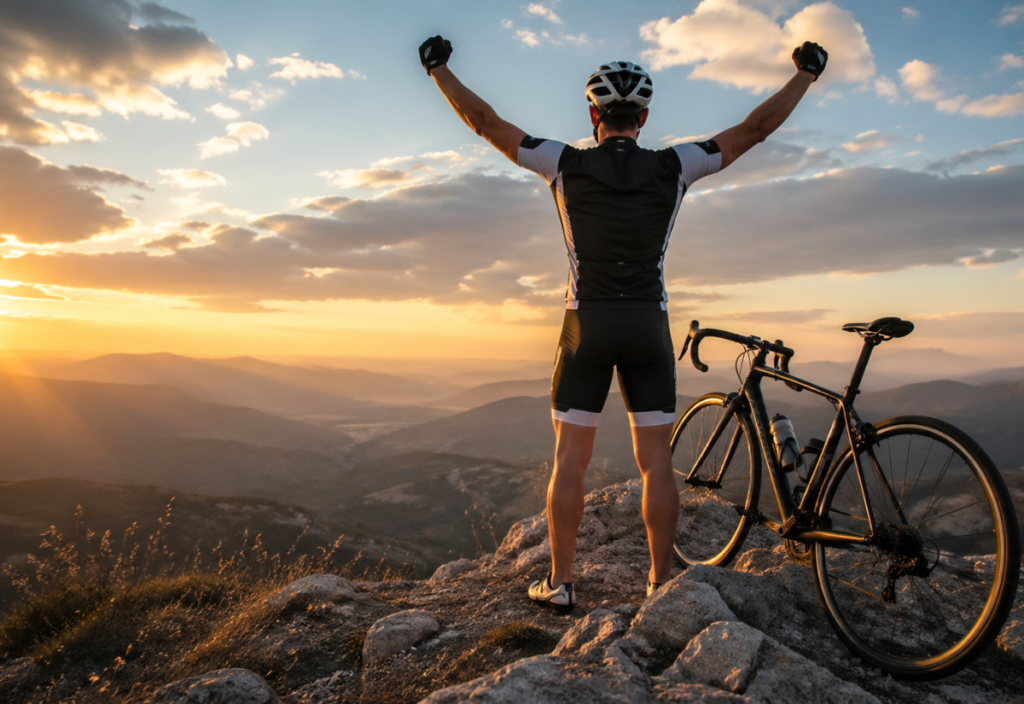
The bicycle triumph motif appears throughout art, literature, film, and advertising. The image of a lone cyclist conquering a mountain pass has become a modern archetype — as powerful as the marathon runner or the mountaineer.
In cinema, films like Breaking Away (1979) and the documentary Icarus (2017) use cycling as a lens for exploring ambition, identity, and moral complexity. In art, cycling victory has been depicted in everything from vintage race posters to contemporary photography. The bicycle has always been more than a machine — it is a canvas for human aspiration.
Advertising has long understood this. From early 20th-century bicycle advertisements promising freedom and modernity to contemporary campaigns for premium cycling brands, the language of triumph has been central to how bicycles are sold and understood culturally.
Road Cycling vs. Mountain Biking: Different Kinds of Triumph
| Factor | Road Cycling Triumph | Mountain Biking Triumph |
| Primary challenge | Endurance, speed, team tactics | Technical skill, terrain navigation |
| Iconic events | Tour de France, Giro, Classics | Enduro World Series, Downhill World Cups |
| Personal triumph marker | Century ride, climbing a col | Clearing a technical trail, first black run |
| Community culture | Club rides, sportives, criteriums | Trail days, bikepacking, local riding groups |
| Equipment focus | Lightweight, aerodynamic bikes | Full-suspension, dropper posts, wide tires |
| Victory feeling | Distance conquered, time beaten | Fear overcome, line cleaned perfectly |
Both disciplines offer rich pathways to bicycle triumph. The road cyclist and the mountain biker may speak different languages, but they share the same deep satisfaction — the feeling of having pushed beyond what they thought possible.
Conclusion
Bicycle triumph is not reserved for professional athletes or cycling legends. It belongs to every person who clips into the pedals and decides to go further than they went yesterday. It belongs to collectors preserving the heritage of brands like Triumph. It belongs to the Saturday morning club rider who finally crests the hill that beat them last week.
The bicycle has always been, at its core, a machine built for triumph. Over distance. Over doubt. Over the limits we draw around ourselves. The greatest riders in history knew this. And so does every cyclist who has ever pushed through the pain to reach the top — and felt, for a moment, completely and utterly victorious.
FAQ
1. What does “bicycle triumph” mean in cycling culture?
In cycling culture, bicycle triumph refers to any significant achievement on a bike — whether that’s winning a professional race, completing a personal challenge, or overcoming a physical setback. It captures the idea that cycling, more than most sports, rewards persistence and willpower over pure natural talent.
2. Is Triumph a real bicycle brand?
Yes. The Triumph Cycle Company was a real British manufacturer founded in Coventry in 1885. They produced high-quality bicycles before transitioning to motorcycles. Original Triumph bicycles are now sought-after vintage collectibles, especially models from the early 20th century featuring the iconic winged head badge.
3. What is the greatest bicycle triumph in Tour de France history?
Many cycling historians point to Greg LeMond’s 1989 Tour de France victory as the greatest single-day bicycle triumph in the race’s history. Overcoming a 50-second deficit to win by just 8 seconds on the final time trial stage remains one of the most dramatic sporting comebacks ever recorded.
4. How can a beginner achieve a personal bicycle triumph?
Beginners can experience genuine bicycle triumph by setting a meaningful first goal — such as a 30km ride, a first organized sportive, or a multi-day tour. With consistent training (3–4 rides per week), proper nutrition, and a well-fitted bike, most beginners can achieve a significant personal cycling milestone within three to six months.
5. Why is cycling considered a symbol of triumph and freedom?
The bicycle has represented freedom and self-propelled achievement since its invention. It democratized personal transport, played roles in women’s suffrage movements, and continues to symbolize independence from fossil fuels. In sport, cycling’s extreme physical demands — particularly climbing — make every summit a genuine triumph of human will over geography.