Introduction
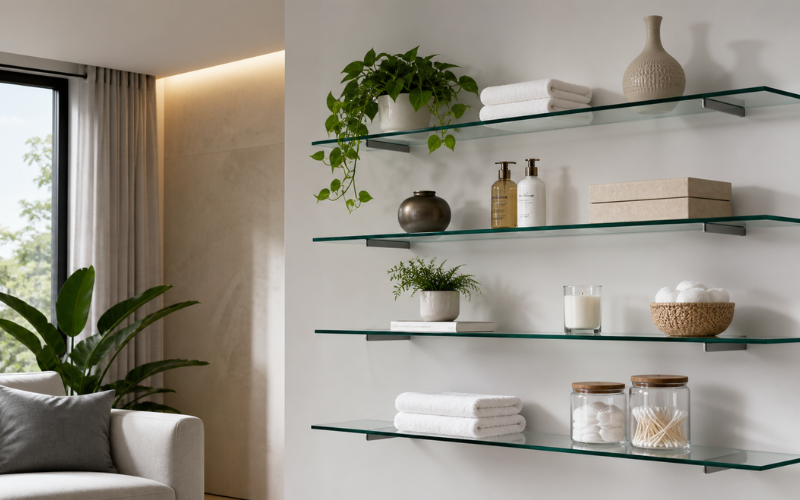
Glass shelves are flat storage or display surfaces made from glass and used in many parts of a home or workspace. You may see them in bathrooms holding skincare products, in kitchens displaying jars or cups, in living rooms showing books and décor, or in offices keeping small items organized. They can also be used in cabinets, display units, shops, and modern wall designs.
One reason glass shelves are so popular is their clean and open appearance. Unlike heavy wooden shelves or bulky cabinets, glass does not make a room feel crowded. It reflects light, blends well with many interior styles, and gives storage a lighter, more polished look. This makes it a smart choice for both small and large spaces.
However, choosing the right glass shelf is not only about appearance. You also need to think about the type of glass, thickness, size, weight capacity, installation method, room use, and safety. A shelf used for light decoration is different from one used to hold dishes, bathroom bottles, or heavy display items.
Why Glass Shelves Are a Practical Choice for Modern Spaces
Glass shelves are often chosen because they offer storage without making a room feel heavy. They help keep items visible and easy to reach while still maintaining a neat look. In modern homes, where clean lines and open spaces are common, glass shelves fit naturally.
They are also very flexible. A glass shelf can look elegant in a luxury bathroom, simple in a kitchen, professional in an office, or decorative in a living room. Because glass is transparent, it does not clash strongly with wall colors, furniture, tiles, or metal finishes. This makes it easier to match with different interior styles.
Another benefit is that glass shelves can make a small room feel brighter. Since they allow light to pass through, they do not visually block the wall or corner where they are placed. This is especially helpful in bathrooms, narrow kitchens, and small apartments.
Common Places to Use Glass Shelves at Home
Glass shelves can be used in almost every room, but they work best when the purpose is clear. In bathrooms, they are useful for holding soap, perfume, towels, skincare products, and small decorative items. In kitchens, they can display cups, spice jars, glassware, or light dishes.
In living rooms, glass shelves are often used to show framed photos, plants, candles, books, awards, or art pieces. They can also be added inside cabinets or display units to create a clean and stylish presentation. In bedrooms, they can work as light bedside storage or a place for personal décor.
Home offices can also benefit from glass shelves. They help organize books, files, stationery, or small equipment while keeping the space open and professional. The key is to use them where they add both function and style.
Different Types of Glass Shelves and Where They Work Best
Not all glass shelves are the same. Some are made from standard glass, while others are made from stronger safety glass. For most homes, tempered glass shelves are a better choice because tempered glass is stronger than regular glass and breaks into smaller, less sharp pieces if damaged.
Clear glass shelves are the most common option. They create a simple and open look, making them suitable for bathrooms, kitchens, living rooms, and offices. Frosted glass shelves offer a softer appearance and provide a little more visual privacy, which can work well in bathrooms or bedrooms.
Tinted glass shelves, such as grey, bronze, or black glass, can add a more dramatic style. These are often used in modern living rooms, display cabinets, or luxury interiors. The best type depends on where the shelf will be installed and what style you want to create.
Glass Shelf Thickness and Weight Capacity Explained
The thickness of a glass shelf matters because it affects both strength and appearance. Thin glass may look delicate and elegant, but it is not always suitable for heavier items. Thicker glass usually feels stronger and more stable, especially when used for larger shelves or items with more weight.
For light decorative items, a thinner shelf may be enough. For heavier objects such as books, dishes, or multiple bottles, thicker glass is usually safer. Weight capacity also depends on the shelf length, the type of glass, the bracket strength, and how well the shelf is installed.
A common mistake is thinking the glass alone determines strength. In reality, the wall, anchors, brackets, and installation quality are just as important. Even strong glass shelves can become unsafe if they are installed poorly or overloaded.
Choosing the Right Size and Shape for Glass Shelves
The right size for glass shelves depends on the room, wall space, and what you plan to place on them. A shelf that is too small may not be useful, while one that is too large can look awkward or become harder to support safely.
Straight rectangular glass shelves are the most common because they are simple and practical. Corner glass shelves are useful in bathrooms, kitchens, and small rooms where wall space is limited. Curved or rounded glass shelves can create a softer look and reduce sharp-looking edges, especially in family spaces.
Before choosing a size, measure the wall carefully and think about the height, depth, and nearby furniture. The shelf should be easy to reach, not block movement, and not feel out of place in the room.
Framed vs Frameless Glass Shelves
Framed glass shelves have visible supports or borders, often made from metal, wood, or another material. They may look more structured and can match other finishes in the room, such as chrome taps, black handles, or brass lights.
Frameless glass shelves have a cleaner and more minimal look. They usually rely on discreet brackets or wall supports, making the glass appear lighter. This style is popular in modern bathrooms, display areas, and clean interior designs.
Both options can work well. Framed shelves may feel more secure visually, while frameless shelves create a floating, open effect. The best choice depends on your style, safety needs, and how much visual weight you want on the wall.
Wall-Mounted Glass Shelves: What to Know Before Installing
Wall-mounted glass shelves can look beautiful, but proper installation is very important. The wall must be strong enough to hold the shelf and the items placed on it. Drywall, brick, tile, and concrete all require different types of anchors or screws.
The brackets should also be suitable for the shelf size and weight. Small decorative brackets may not support heavy objects. If the shelf is long, it may need more than two support points to prevent bending or pressure on the glass.
It is also important to install glass shelves level. A shelf that tilts forward can become unsafe, especially in bathrooms or kitchens where items may slide. For heavier shelves or difficult walls, professional installation is often a wise choice.
Glass Shelves for Bathrooms
Glass shelves are especially popular in bathrooms because they handle moisture better than many wood products and are easy to clean. They can be placed above sinks, near mirrors, inside shower areas, or in empty wall corners.
In bathrooms, glass shelves are often used for everyday items like soap, shampoo, perfume, lotion, toothbrush holders, and folded hand towels. Because bathrooms are usually smaller, glass helps keep the room feeling open instead of crowded.
For bathroom use, safety and placement matter. Shelves should not be installed where someone may bump into them easily. Rounded edges, strong brackets, and tempered glass are better choices for wet or busy bathroom spaces.
Glass Shelves for Kitchens
In kitchens, glass shelves can create a clean and stylish display area. They work well for cups, jars, bowls, spices, or decorative kitchen items. They can also make a kitchen feel more open than closed cabinets.
However, kitchen shelves need more care because they may collect grease, dust, or fingerprints. Items placed on them should not be too heavy unless the shelf is designed and installed for that purpose. Glass shelves near cooking areas may also need more frequent cleaning.
For a balanced look, glass shelves can be used in selected areas instead of replacing all upper cabinets. This keeps the kitchen practical while adding a lighter, more modern touch.
Glass Shelves for Living Rooms and Display Areas
Living rooms are one of the best places to use glass shelves for decoration. They can display meaningful items without making the wall feel cluttered. Photos, small plants, candles, sculptures, collectibles, and books can all look attractive on glass.
Glass shelves also work well with lighting. When placed near natural light or soft indoor lighting, they can add brightness and depth to the room. In display cabinets, glass shelves allow light to pass from top to bottom, making the whole display easier to see.
The main goal in a living room is balance. Too many items can make glass shelves look messy, while too few may make them feel empty. A clean arrangement usually works best.
Glass Shelves for Small Spaces
Small spaces can benefit greatly from glass shelves because they provide storage without adding visual bulk. In a narrow bathroom, a glass corner shelf can hold daily items without making the room feel smaller. In a small living room, a wall-mounted glass shelf can replace a bulky side table.
Glass shelves also help use vertical space. Instead of taking up floor area, they allow you to store or display items on the wall. This is helpful in apartments, small bedrooms, compact kitchens, and entryways.
The key is to avoid overcrowding. In small rooms, glass shelves should be simple, neat, and carefully placed so they improve the space rather than add clutter.
Safety Tips for Using Glass Shelves
Safety should always come first when using glass shelves. Choose tempered glass whenever possible, especially in bathrooms, kitchens, children’s rooms, or busy areas. Make sure the edges are smooth and polished to reduce the risk of cuts or scratches.
Do not overload the shelves. Even strong glass has limits, and too much weight can put pressure on the brackets and wall. Heavy items should be placed closer to the supports rather than near the outer edge.
It is also important to check shelves from time to time. Look for loose brackets, cracks, chips, or movement. If a shelf feels unstable, stop using it until the issue is fixed.
How to Match Glass Shelves with Your Interior Style
Glass shelves are easy to match with many styles because they are simple and neutral. For a modern look, clear glass with chrome, black, or brushed metal brackets works well. For a softer design, frosted glass or rounded edges can feel more relaxed.
In classic interiors, glass shelves can be paired with brass or bronze supports. In minimal spaces, frameless shelves can keep the wall clean and open. In industrial rooms, darker glass with black metal brackets may look more fitting.
Cleaning and Maintaining Glass Shelves
Glass shelves are easy to maintain, but they do show fingerprints, dust, and water marks more clearly than some other materials. Regular cleaning keeps them looking bright and polished.
A soft cloth and gentle glass cleaner are usually enough. For bathroom shelves, wiping away moisture can help prevent water spots. In kitchens, shelves may need cleaning more often because of cooking steam and grease.
Avoid using rough pads or harsh tools that may scratch the surface. Also, lift items instead of dragging them across the glass to protect the finish.
Common Mistakes to Avoid When Choosing Glass Shelves
One common mistake is choosing glass shelves only for appearance without thinking about function. A shelf may look beautiful, but it must also suit the room and the items it will hold.
Another mistake is ignoring weight capacity. Placing heavy books, dishes, or equipment on a shelf that is not designed for them can be risky. Poor installation is also a major issue. Even high-quality glass can fail if the brackets or wall anchors are weak.
Some people also choose shelves that are too deep or too long for the space. This can make the room feel uncomfortable or increase the chance of bumping into the shelf.
When Glass Shelves May Not Be the Best Option
Glass shelves are useful, but they are not perfect for every situation. If you need storage for very heavy items, solid wood or metal shelving may be a better choice. If the shelf will be placed in a rough-use area, glass may require more care than other materials.
Homes with small children or pets may also need extra caution. Glass shelves should be placed higher, installed securely, and kept away from areas where they may be pulled or hit.
Glass also needs regular cleaning to keep its clear appearance. If you prefer low-maintenance storage that hides dust and fingerprints, another shelf material may suit you better.
Final Thoughts
Glass shelves are a stylish and practical way to add storage without making a room feel crowded. They work well in bathrooms, kitchens, living rooms, offices, and small spaces because they create a clean, open, and modern look.
The best glass shelves are not chosen by appearance alone. You should consider the glass type, thickness, size, weight capacity, brackets, wall strength, and room use. When installed properly and used safely, glass shelves can make a space feel brighter, neater, and more organized.
Whether you want to display décor, store daily items, or improve a small room, glass shelves can be a smart choice when they match your needs and your home style.
FAQs
1. Are glass shelves strong enough for everyday use?
Yes, glass shelves can be strong enough for everyday use when they are made from the right type of glass and installed properly. Tempered glass is usually a safer and stronger option for most homes.
2. What type of glass is best for shelves?
Tempered glass is often the best choice for glass shelves because it is stronger than regular glass and safer if it breaks. It is especially useful in bathrooms, kitchens, and busy areas.
3. Can glass shelves be used in bathrooms?
Yes, glass shelves are a popular choice for bathrooms. They handle moisture well, are easy to clean, and help small bathrooms feel more open and organized.
4. How do I know how much weight a glass shelf can hold?
Weight capacity depends on the glass thickness, shelf size, bracket strength, wall type, and installation quality. Always check the product details and avoid placing too much weight on the shelf.
5. Are glass shelves hard to clean?
No, glass shelves are not hard to clean, but they do show dust, fingerprints, and water marks easily. A soft cloth and gentle glass cleaner can keep them looking clear and fresh.